





Many people sense that something in their body is not working optimally, even when medical tests appear normal. Energy feels inconsistent. Stress tolerance changes. Sleep is no longer restorative. Focus fluctuates. Recovery takes longer than it should.
These experiences are often dismissed because they do not fit neatly into standard diagnostic categories. Yet the body is clearly communicating.
Bioenergetic testing offers a way to understand how the body communicates internally as a coordinated system, rather than as isolated organs or symptoms. This article explains how bioenergetic testing works, using a clinical, whole-system framework that focuses on regulation, communication, and adaptive capacity.
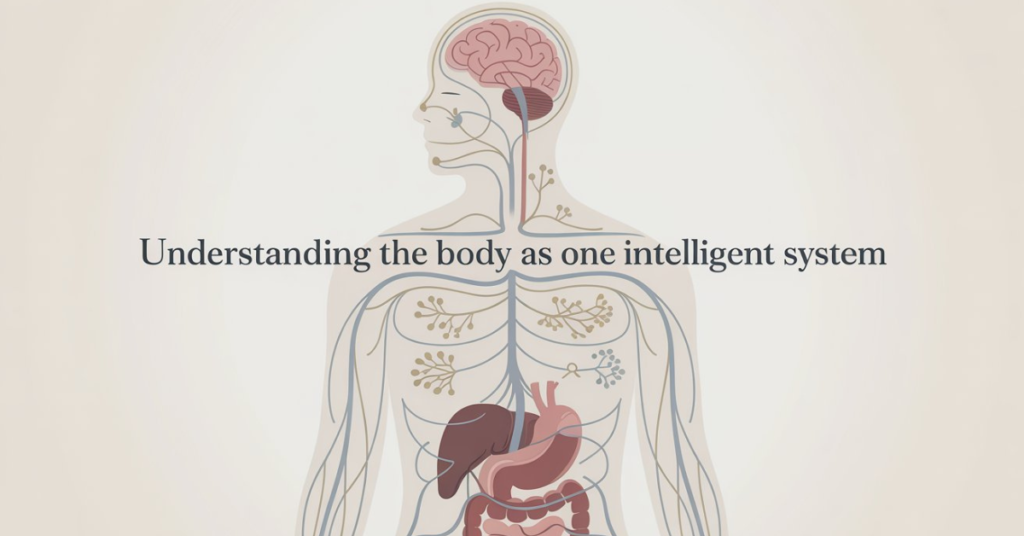
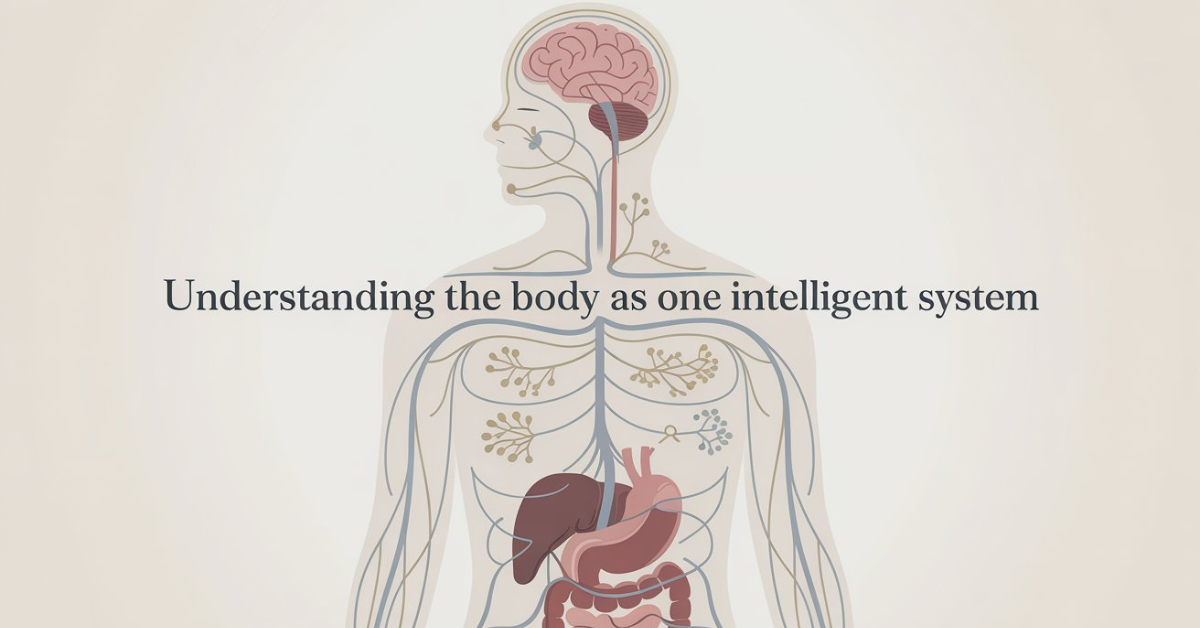
Understanding the Body as a Communication Network
Before understanding how bioenergetic testing works, it helps to understand how the body functions at a systems level. The human body is not a collection of independent parts. It operates as an integrated network of:
- Nervous system signaling
- Hormonal coordination
- Immune and inflammatory responses
- Metabolic and digestive processing
- Emotional and psychosomatic regulation
- Environmental responsiveness
These systems constantly exchange information. When communication is efficient, the body adapts well to stress and maintains balance. When communication becomes strained or overloaded, symptoms begin to appear, often long before disease develops. Bioenergetic testing focuses on this communication layer.
What Bioenergetic Testing Measures (In Simple Clinical Terms)
Bioenergetic testing does not diagnose disease or replace medical testing. Instead, it evaluates functional and regulatory patterns that influence how the body performs day to day. Specifically, bioenergetic testing examines:
- How the body is responding to stressors
- How efficiently systems coordinate with each other
- Where energy demand exceeds adaptive capacity
- How emotional load influences physiology
- How environmental factors are being processed
- Whether the regulatory balance is being maintained
This provides insight into how the system is functioning beneath the surface, often before symptoms become severe or chronic.
The Role of Preclinical Signals
One of the most important aspects of bioenergetic testing is its focus on preclinical signals. Preclinical signals are subtle indicators that the body is compensating, adapting, or under strain — even when lab values remain within normal ranges. Examples include:
- Reduced resilience to stress
- Slower recovery after exertion
- Increased sensitivity to stimuli
- Fluctuating energy levels
- Sleep that is unrefreshing
- Emotional reactivity without a clear cause
These signals reflect functional stress, not pathology. Bioenergetic testing helps bring these patterns into view so they can be understood and supported early.
How Bioenergetic Testing Works: Step by Step
1. Whole-System Intake and Context Gathering
The process begins with a structured intake that looks beyond symptoms alone. This includes:
- Energy patterns
- Stress exposure
- Sleep quality
- Emotional load
- Lifestyle demands
- Environmental factors
This context is essential because regulation does not happen in isolation.
2. Non-Invasive System Assessment
Bioenergetic testing uses a gentle, non-invasive method to observe how the body responds to informational input. The assessment evaluates regulatory patterns across multiple systems simultaneously rather than isolating one function at a time. This allows practitioners to observe:
- Stress response behavior
- System coherence
- Load distribution
- Adaptive efficiency
- Communication balance
The goal is not to label, but to map how the system is operating as a whole.
3. Pattern Recognition Across Systems
Once data is gathered, the practitioner analyzes patterns, not isolated readings. This includes examining relationships between:
- Nervous system regulation and energy levels
- Emotional load and physical symptoms
- Hormonal rhythms and recovery capacity
- Digestive processing and immune stress
- Environmental responsiveness and system fatigue
Patterns are more informative than individual data points because they reveal how systems influence one another.
4. Interpretation Through a Clinical Lens
Interpretation focuses on:
- Where the system is compensating
- Where regulation is strained
- Which systems are carrying excess load
- How communication efficiency may be reduced
Importantly, this interpretation stays within a functional and educational framework, supporting clarity without making medical claims.
5. Translating Signals Into Actionable Insight
The final step is translation, helping the individual understand what their body is communicating and how to support it. This includes:
- Clear explanations of observed patterns
- Identification of primary stress contributors
- Support strategies aligned with system needs
- Guidance that improves regulation and resilience
The result is not a diagnosis, but a roadmap for improving system balance and adaptive capacity.
Why Communication Matters More Than Symptoms
Symptoms are often the result of prolonged regulatory strain. Bioenergetic testing looks earlier in the process at communication and coordination. When communication improves, many symptoms naturally soften because the system regains flexibility. This is why bioenergetic testing is often described as clarifying, even when symptoms are complex or hard to explain.
Supporting Other Forms of Care
Bioenergetic testing is frequently used alongside other wellness or medical approaches. When system communication improves, the body often becomes more receptive to:
- Nutritional strategies
- Stress-management practices
- Physical therapies
- Lifestyle changes
- Integrative or conventional medical care
By improving regulatory readiness, bioenergetic testing can enhance how effectively other interventions are utilized.
Who Benefits From Understanding Whole-System Communication
This approach is especially helpful for individuals who:
- Feel “off” but lack clear explanations
- Experience stress-related symptoms
- Have fluctuating energy or recovery
- Are highly sensitive to environments
- Want proactive insight into system balance
- Value prevention and long-term resilience
Understanding how the body communicates allows people to respond earlier, rather than waiting for a breakdown.
How This Fits Within HolistIQ Scan’s Approach
At HolistIQ Scan in Plainview, Long Island, New York, bioenergetic testing is used as a clinical-style assessment of system communication. The focus is on:
- Clarity over assumptions
- Education over fear
- Patterns over labels
- Regulation over reaction
Both in-person and remote sessions are available, allowing individuals locally and globally to access whole-system insight.
Bioenergetic Testing as a Tool for Awareness, Not Labels
It is important to be clear about what bioenergetic testing is and is not.
It is:
- Non-invasive
- Educational
- Functional
- Pattern-based
It is not:
- A medical diagnosis
- A replacement for clinical testing
- A promise of treatment outcomes
This clarity is what makes bioenergetic testing a trusted, responsible tool for understanding body communication.
Learn More:
👉 Bioenergetic testing for stress and anxiety
👉 Bioenergetic Testing in Plainview, Long Island
👉 Bioenergetic Testing vs Traditional Tests
Listening Before the Body Has to Shout
The body communicates constantly. Most people simply lack a framework for understanding those signals. Bioenergetic testing provides that framework. By Focusing on whole-system communication, it helps individuals recognize strain early, support regulation, and build resilience over time. When the body is understood as an intelligent, communicating system, clarity replaces confusion, and informed choices become possible.