



Something shifted. Maybe it happened gradually, maybe it felt almost overnight. The weight started collecting around your middle, no matter what you eat. Sleep got lighter, or broken, or just not restoring the way it used to. Your mood has a mind of its own. You are tired in a way that feels different from before.
And the thing that gets to most women? Nobody really warned them this was coming.
You go to your doctor. The blood work comes back fine. You are told it is stress, or just getting older, or something you need to manage better. And you drive home feeling more confused than when you walked in.
Here is what is actually happening: after 35, your female hormones start shifting in real, measurable ways. Not dramatically at first. Quietly. But those quiet shifts affect everything: your energy, your weight, your mood, your sleep, your skin, your focus, your sex drive. All of it.
At HolistIQ in Plainview, Long Island, this is one of the most common things we hear from women who come through our door. Not sick. Not broken. Just dealing with changes nobody explained and a body that feels like it belongs to someone else.
This article is for you. Plain language, no medical jargon, just a real, honest look at what happens to female hormones after 35 and what actually helps.
Why 35 Is When Things Start to Change
It does not happen to everyone the same way. But for a lot of women, something shifts somewhere between 35 and 45. It is not a coincidence. It is biology.
After your mid-30s, a few things start happening at the same time.
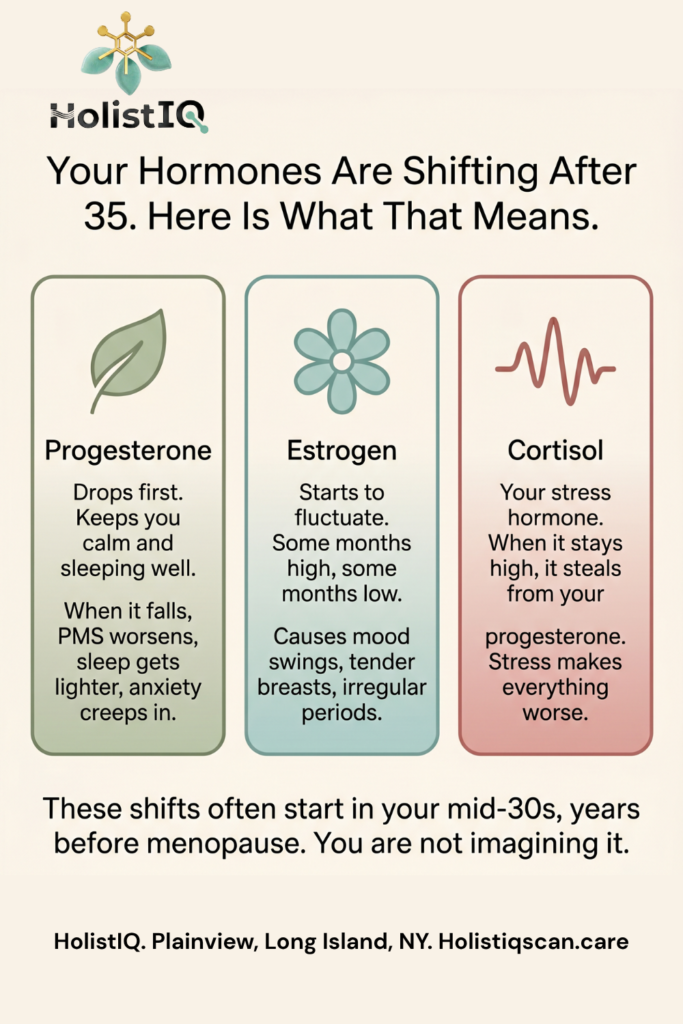
Your progesterone starts dropping first. This is the hormone that balances estrogen, supports sleep, keeps your mood steady, and helps regulate your cycle. When it drops, even slightly, you start to feel it. Sleep gets lighter. PMS gets worse. Anxiety shows up more.
Then estrogen starts fluctuating too. Not gone, not yet, just less predictable. Some months it is higher than it should be, some months it dips. That fluctuation is often what drives the mood swings, the breast tenderness, the heavy periods that seem to come out of nowhere.
And then there is cortisol, your stress hormone. This one does not get talked about enough when it comes to female hormones, but it matters a lot. When cortisol stays elevated, which it often does for women managing careers and families and everything else, it directly interferes with your progesterone production. The body actually steals progesterone to make more cortisol when it is stressed. Women on Long Island living full, busy, high-pressure lives are dealing with this more than almost anyone.
All of this is happening before menopause. Before anything shows up on a standard blood test as abnormal. In that wide, confusing gap between feeling totally fine on paper and feeling genuinely off.
What It Actually Feels Like (And Why It Is So Easy to Dismiss)
This is the part most articles skip. They list symptoms like a checklist. But that is not what it feels like from the inside.
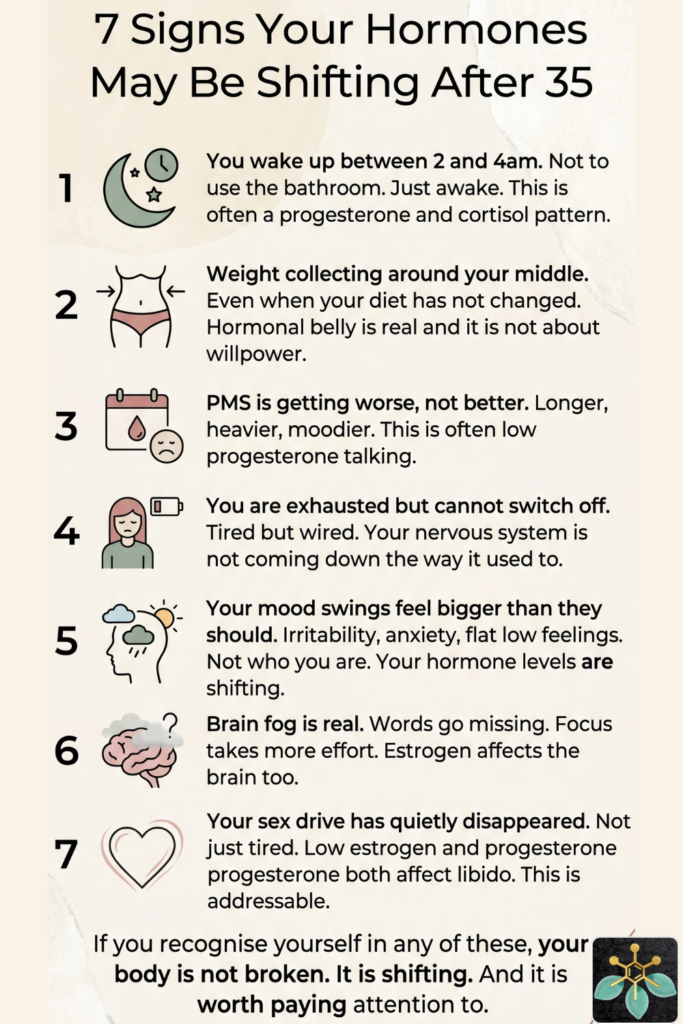
It feels like waking up at 3 am for no reason and lying there for two hours. It feels like gaining eight pounds between January and March when nothing in your diet has changed. It feels like crying at something small and then feeling embarrassed about it. It feels like reaching for your phone to remember a word that used to come instantly.
It feels like getting to 4 pm and having absolutely nothing left.
Here is what the research and what we see at HolistIQ consistently shows happens when female hormones start shifting after 35:
Weight that collects in new places. Estrogen and progesterone both affect how and where your body stores fat. When they shift, especially with elevated cortisol on top of that, many women notice what people call a hormonal belly, weight around the middle that does not respond to the usual things. It is not willpower. It is hormones.
Sleep that changes character. Progesterone has a natural calming effect on the nervous system. When it drops, sleep gets lighter. You might fall asleep fine, but wake up at 2 or 3 am and stay there. Or you sleep a full night but wake up feeling like you barely rested.
Mood that has a mind of its own. The week before your period gets harder. Anxiety that was manageable starts feeling less manageable. Irritability that is not really you. Sometimes a low, flat feeling that is hard to explain to anyone else.
Energy crashes that feel different from before. Not just tired. A kind of tired that sleep does not fix. Your body is spending more than it can restore, and that shows up in the afternoon slump that gets worse year on year.
Brain fog. Words go missing. Focus takes more effort. You forget things you never used to forget. Estrogen actually plays a role in brain function and memory, so when levels fluctuate, you feel it cognitively too.
Skin and hair changes. Skin gets drier. Hair might thin at the temples or feel less full. Some women notice more facial hair, which is often related to the testosterone-to-estrogen ratio shifting as estrogen fluctuates.
A lower sex drive. This one gets dismissed a lot as just being tired or stressed. But estrogen and testosterone both affect sex drive in women, and when female hormone levels shift, libido often goes with them.
None of this is your fault. None of it is in your head. The fact that most standard blood work misses it does not mean it is not real.
The Hormones That Matter Most After 35
You do not need a science degree to understand this. Here is the simple version of what each hormone does and what you feel when it is off.
Estrogen – The One Everyone Knows, But Not How It Really Works
Estrogen is not just a reproductive hormone. It affects your brain, your bones, your skin, your heart, your mood, your sleep, and your metabolism. When estrogen levels in females are steady, things tend to feel okay. When they fluctuate, especially in that perimenopause window that can start in your mid-30s, you feel the effects everywhere.
Low estrogen can cause hot flashes, dry skin, brain fog, low mood, and a drop in sex drive. Elevated estrogen can cause bloating, breast tenderness, heavy periods, and mood swings in the other direction. The problem is that most women are never told they could be dealing with estrogen fluctuation this early.
Your estrogen is not just a fertility thing. It is a whole-body hormone.
Progesterone – The Calm One, and the First One to Drop
Progesterone is the hormone that most women know the least about, and it is often the first one to shift after 35.
When you have enough progesterone, you feel calm. You sleep well. PMS is manageable. Your cycle is predictable. When low progesterone sets in, it is the opposite. Sleep gets broken. The week before your period is harder. Anxiety is closer to the surface. Your mood fluctuates in ways that feel bigger than they should.
The benefits of progesterone for women are huge and underappreciated. It is also the hormone that cortisol competes with directly. When you are under chronic stress, your body will sacrifice progesterone to make more cortisol. Which is why so many women on Long Island, managing full lives at full speed, find their progesterone-related symptoms getting worse during stressful seasons.
Cortisol – The Stress Hormone That Affects Everything Else
High cortisol levels in females do not just make you feel stressed. Over time, elevated cortisol disrupts your estrogen and progesterone balance, affects your thyroid function, interferes with sleep, and drives the kind of weight gain that tends to sit around the middle and not respond to diet changes.
This is the hormone that conventional health care often does not connect to what women are experiencing. Because high cortisol does not always show up dramatically on blood work. It shows up in how you feel every single day.
Female cortisol levels are particularly sensitive to chronic stress, poor sleep, and emotional load. For women who are carrying a lot, professionally and personally, cortisol is often a huge piece of the hormonal puzzle.
Testosterone – Yes, Women Have It Too, And It Matters
Testosterone in women often gets ignored or only discussed in the context of PCOS. But testosterone affects energy, sex drive, muscle tone, mood, and motivation. After 35, testosterone levels naturally start to decline slowly. For some women, this shows up as a significant drop in drive and libido. For others, the ratio between testosterone and estrogen shifts as estrogen fluctuates, which can create symptoms of relatively higher testosterone, things like oily skin, acne, or unwanted hair growth.
Neither extreme feels good. And the ratio between these hormones matters as much as the absolute levels.
Thyroid Hormones – The Ones That Control Everything Else’s Speed
Your thyroid governs your metabolism, your energy, your temperature regulation, your hair growth, your digestion, and your mood. Female thyroid levels are more susceptible to disruption than male thyroid levels, and thyroid issues are significantly more common in women over 35.
Even subclinical thyroid changes, things that might not show up as out of range on a standard panel, can produce real symptoms: fatigue, weight gain, brain fog, cold hands and feet, hair thinning, and mood changes. The thyroid and the ovarian hormones talk to each other constantly. When one is off, the other often follows.
What Actually Throws Female Hormones Off After 35
Understanding what disrupts female hormones is just as important as knowing what they do. And the biggest drivers are often things that feel completely normal because everyone around you is dealing with them, too.
Chronic stress. This is the biggest one. Long Island life, in particular, creates a sustained stress load that keeps cortisol elevated, which then pulls on progesterone, disrupts sleep, and throws the whole hormonal picture off. The commute, the cost of living, the school schedules, the pressure. It is real, and it adds up.
Poor or broken sleep. Sleep deprivation elevates cortisol and disrupts the natural rhythm that governs hormonal production overnight. Many hormones, including growth hormone and progesterone, are released during deep sleep. When you are not getting to that deep stage, you are missing the hormonal reset your body needs.
Blood sugar swings. Female hormones and blood sugar are more connected than most people realize. Big swings in blood sugar throughout the day, from skipping meals, eating lots of refined carbs, or going too long without eating, stress the adrenal system, spike cortisol, and create a downstream disruption to the hormonal balance. The afternoon crash many women feel is often more hormonal and metabolic than it is about sleep.
Gut health. Gut health and female hormones are directly linked through something researchers call the estrobolome, which is the collection of bacteria in your gut that helps regulate estrogen metabolism. When the gut is imbalanced, estrogen can get reabsorbed rather than cleared, which contributes to estrogen dominance symptoms even when estrogen production itself is not the problem.
Environmental factors. Things like plastics, certain personal care products, and processed foods contain compounds that can disrupt hormonal signaling. This does not mean you need to overhaul everything. It means these things are worth knowing about.
Not enough recovery time. Women who are always on, never resting, carrying emotional and logistical load at full capacity, are asking their adrenal and hormonal systems to perform without adequate recovery. Over time, this depletes the reserves that hormonal balance requires.
How to Support Your Female Hormones After 35, Naturally
Before anything else: this is not about a perfect protocol. It is about consistent, gentle support for your whole system. Small things done regularly make a much bigger difference than dramatic changes done once.
Actually Deal With Your Stress Response
Do not manage your stress. Actually, give your nervous system the chance to come down. This means regular real rest, not scrolling, not working, genuine downtime. Time in nature. Breathing. Whatever helps your nervous system genuinely shift gears.
When cortisol is chronically high, everything else is upstream. Supporting your nervous system is honestly the single most impactful thing for female hormone balance after 35. This is not soft advice. It is physiology.
Protect Your Sleep Like It Is Your Most Important Health Habit
Because it is. Progesterone is calming and promotes deep sleep, but when it drops, sleep suffers. And when sleep suffers, cortisol rises, which further suppresses progesterone. It is a cycle that has to be interrupted.
Consistency matters here more than anything. Regular sleep and wake times, a dark cool room, no screens in the last hour, and not eating too late at night. Small things that give your hormonal system the overnight reset it needs.
Eat in a Way That Keeps Your Blood Sugar Steady
This does not mean a strict diet. It means not going long stretches without eating, not starting the day with just coffee, including protein at most meals, and reducing the refined carbs that cause big energy spikes followed by crashes.
The relationship between female hormones and blood sugar is real and direct. Steady blood sugar means a calmer cortisol response, which means less interference with your progesterone and estrogen balance.
Support Your Gut
This one surprises people. But given how directly gut health and female hormones are connected, taking care of your digestive system is hormonal care. Fermented foods, enough fiber, staying hydrated, and not relying on antibiotics unless truly necessary, all support the gut bacteria that help your body process and clear estrogen properly.
Move in a Way That Supports Hormones, Not Just Fitness
High-intensity exercise every day when your body is already under stress can actually push cortisol higher. After 35, a mix of moderate movement, walking, swimming, yoga, cycling, with occasional higher-intensity sessions tends to support hormonal balance better than going hard every single day.
Moving your body consistently, in a way that you actually enjoy and that leaves you feeling better rather than more depleted, that is the goal.
Consider Herbs and Nutrients That Support Hormonal Balance
A few things are worth knowing about if you are in this hormonal transition. Vitex, also called chasteberry, has research behind it for supporting progesterone levels and easing PMS symptoms. DHEA, when appropriate, can support the hormonal precursors that the body uses to make estrogen and testosterone. The benefits of DHEA for females are most relevant in the 40s and 50s as natural levels decline.
Magnesium is another one, especially for sleep and for helping the nervous system calm down. B vitamins support adrenal function. These are not magic fixes. They are nutritional support for systems that are working hard.
This is not medical advice, and these should be discussed with a practitioner who knows your specific situation.
Why Standard Tests Often Miss What You Are Feeling
This comes up so often with women who find HolistIQ that it is worth addressing directly.
You go to your doctor. You describe what you are experiencing. They run a hormone panel. The results come back within normal range. And you are told everything is fine.
But you do not feel fine.
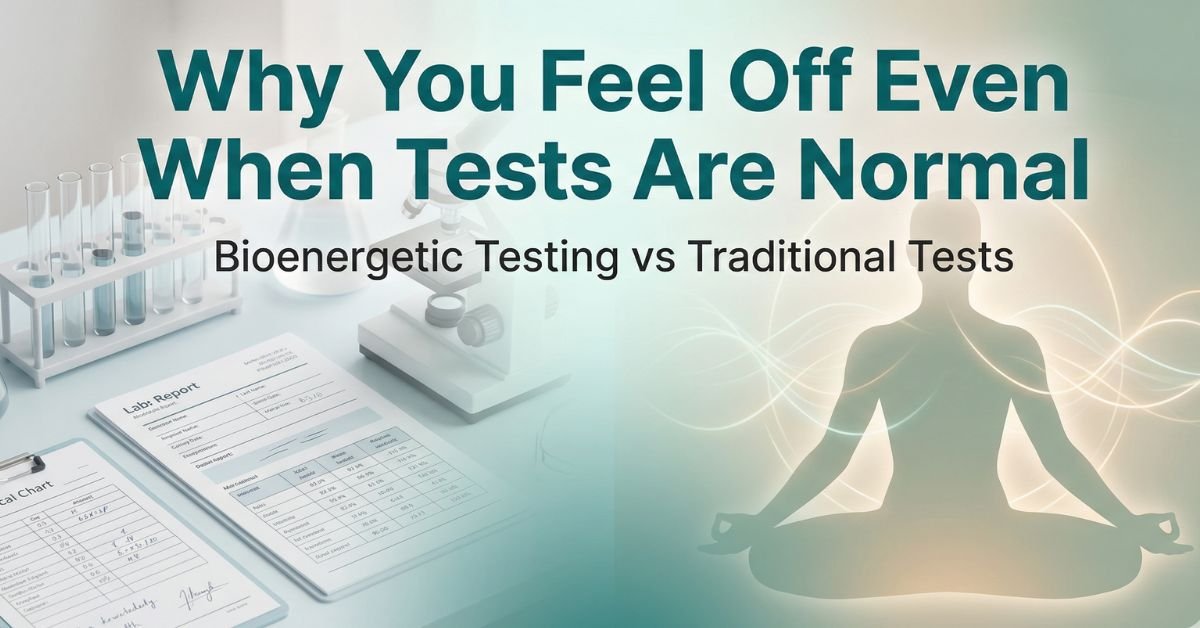
Here is why this happens. Standard hormone tests give you a snapshot in time. They check whether your numbers fall within a reference range that was built on broad population data. They are not designed to catch the subtle shifts and fluctuations that happen across your cycle. They are not designed to look at how your hormones are affecting each other, how your cortisol is interfering with your progesterone, or how your gut is handling estrogen clearance.
Normal on a test does not mean optimal for your body. There is a real difference.
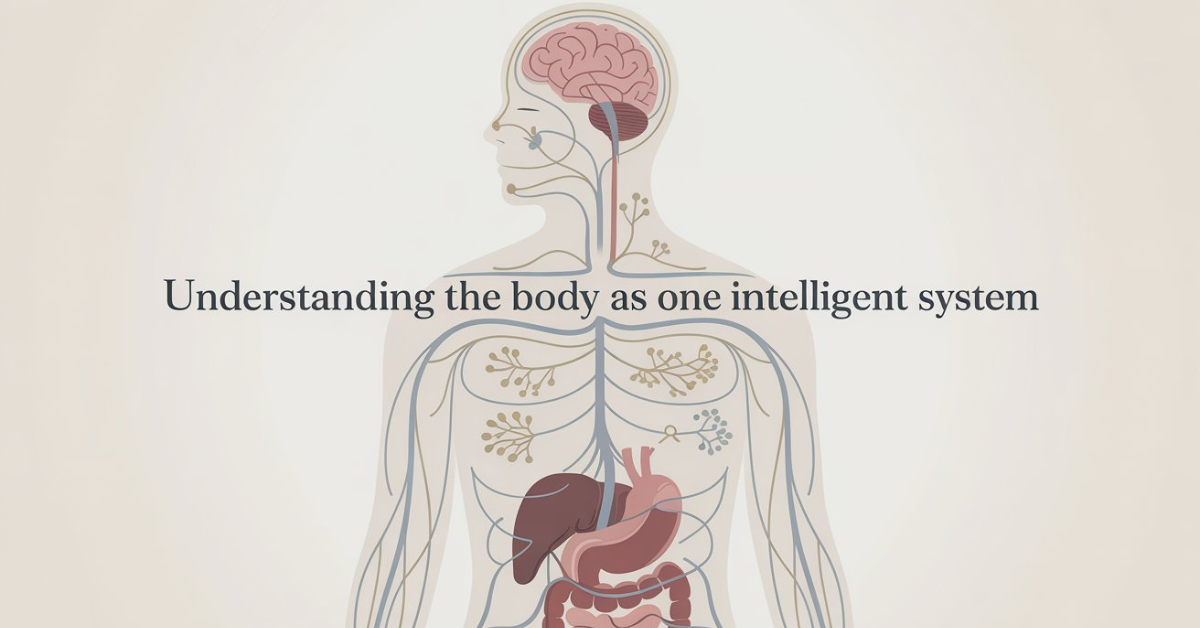
Bioenergetic testing at HolistIQ takes a different approach. Dr. Anubha Goel uses a non-invasive whole-body assessment to look at how your system is actually functioning, not just whether a single number hits a threshold. How your stress response is affecting your hormonal patterns. Where is the inflammatory load sitting? How your sleep rhythm and nervous system regulation are influencing your hormonal balance.
It is not a replacement for blood work. It is the layer underneath, the functional picture that standard tests do not capture.
What Women on Long Island Tell Us Before Their First Scan
We hear versions of the same thing over and over.
“I keep being told my levels are normal, but I feel terrible.” “My PMS has gotten so much worse in the last two years.” “I gained weight around my middle, and nothing is helping.” “I wake up at 3 am almost every night now.” “I do not feel like myself. And nobody can tell me why.”
These women are not imagining things. They are not weak or dramatic or just stressed. They are in a real hormonal transition that started years before menopause, that standard medicine is not well equipped to support, and that can absolutely be addressed with the right whole-system approach.
Many of them feel, after their first bioenergetic scan at HolistIQ, that someone finally connected the dots.
That is what we are here for.
A Note About HRT and Your Options
There is a lot of information and a lot of feelings out there about hormone replacement therapy. We are not here to tell you what to do on that front. That is a conversation between you and your doctor.
What we will say is this: there are many approaches to supporting female hormones, from lifestyle and nutrition, to herbal support, to bioidentical hormones, to conventional HRT, and they are not mutually exclusive. Understanding your own hormonal picture, what is actually shifting in your body, and why, gives you the foundation to make a more informed decision about which path makes sense for you.
HolistIQ is not a medical practice and does not prescribe or recommend HRT. What we do is help you understand your system more fully, so whatever choices you make about your health are grounded in something real.
Read more!
- Preventive Care – Longevity & Immunity
- Bioenergetic testing in Plainview, Long Island
- How bioenergetic testing works
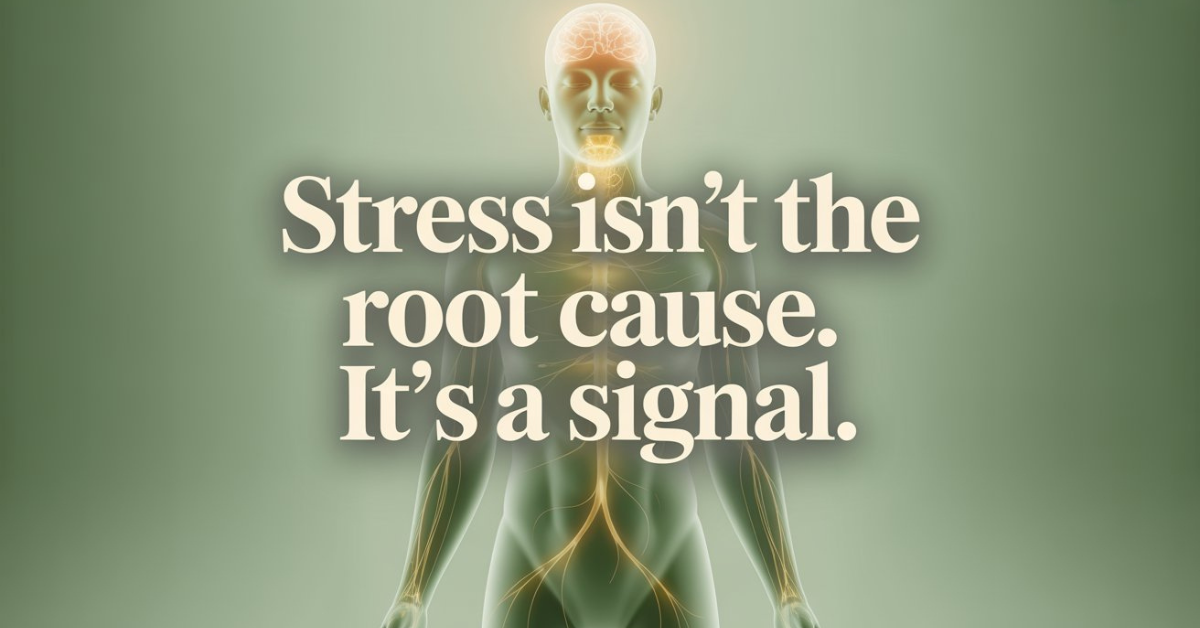
- Why Stress, Poor Sleep & Anxiety Are Often Symptoms – Not the Root Cause
- Bioenergetic Testing vs Traditional Tests: Functional Insight vs Lab Values
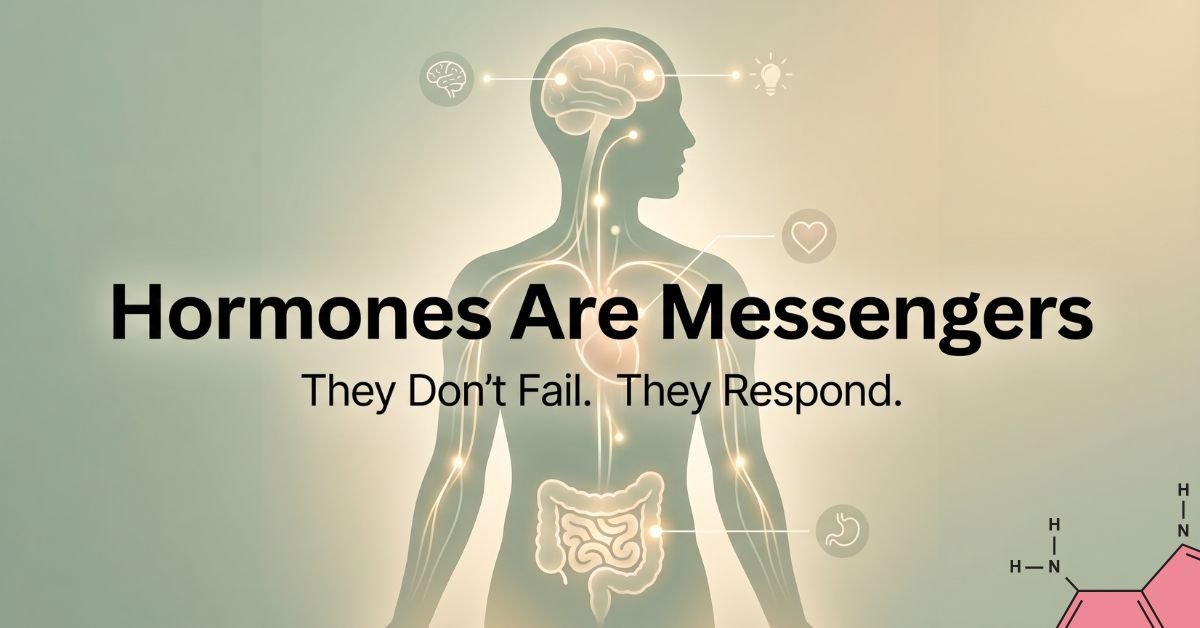
- Hormones as Messengers: What They Reveal About System Balance
- Longevity and Preventive Wellness: Why Starting Early Changes Everything
Frequently Asked Questions
At what age do female hormones start changing?
For most women, the first noticeable hormonal shifts happen somewhere between 35 and 42. Progesterone tends to drop first, which is why PMS can worsen, and sleep can change in your mid to late 30s. Estrogen starts fluctuating more significantly in the early to mid-40s. The whole transition into menopause can take 10 years or more, and most of it happens while you are still having regular periods.
Can stress really affect my female hormones that much?
Yes, and this is genuinely one of the most underappreciated connections in women’s health. When cortisol stays elevated from chronic stress, it directly competes with progesterone production. Your body treats it as a survival situation and deprioritizes reproductive hormones. High cortisol levels in females also affect thyroid function, disrupt sleep, and contribute to weight changes around the middle. Managing your stress response is not a soft suggestion. It has a direct hormonal effect.
What does hormonal belly mean, and is it real?
It is very real. A hormonal belly is the kind of weight gain around the abdomen that many women in their late 30s and 40s notice, even without big changes in diet or exercise. It is driven by the combination of fluctuating estrogen, dropping progesterone, and elevated cortisol, which together change how and where the body stores fat. It tends not to respond well to restriction or intense exercise because those things can actually raise cortisol further. Supporting the hormonal picture is what helps it shift.
Can gut health really affect my hormones?
Yes. There is a direct connection between gut health and female hormones, particularly estrogen. The bacteria in your gut help process and clear estrogen from the body. When gut health is compromised, estrogen can get reabsorbed rather than eliminated, which contributes to what is called estrogen dominance, symptoms like bloating, breast tenderness, heavy periods, and mood swings, even when estrogen production itself is not elevated.
What is the difference between bioenergetic testing and a standard hormone blood test?
A standard blood test checks your hormone levels at one point in time and compares them to a population reference range. It is useful for catching significant imbalances or conditions. Bioenergetic testing looks at the functional whole-body picture, how your hormones are interacting with each other, how your nervous system and stress load are influencing your hormonal patterns, and where the system-level disruption is happening. It does not diagnose medical conditions. It provides a more complete functional picture of what your body is experiencing day to day.
Is this relevant if I am in my late 30s and not near menopause?
Very much so. The hormonal shifts that make women feel off in their 40s almost always start in the late 30s. Perimenopause, the transition toward menopause, can begin years before actual menopause. Most of the symptoms women associate with menopause, such as disrupted sleep, mood changes, and weight shifts, PMS changes, are actually perimenopause symptoms that start much earlier. Understanding and supporting your hormones now, in your late 30s, is the most proactive thing you can do.
Does HolistIQ offer remote sessions?
Yes. Remote bioenergetic testing sessions are available and are just as thorough as in-person sessions. You receive the same non-invasive scan, the same detailed review with Dr. Anubha Goel, and the same personalized wellness plan. HolistIQ works with women across Long Island, New York City, New Jersey, Connecticut, and nationally. You do not have to be near Plainview to benefit.
You Are Not Imagining It. And You Do Not Have to Just Live With It.
Here is what we want you to take away from this.
Your hormones change after 35. That change is real, it is documented, it is something millions of women are going through, and most of them are being told it is fine when it does not feel fine.
The fatigue, the weight, the mood, the sleep, the brain fog, these are not character flaws. They are not you failing to cope with normal life. They are your body’s hormonal systems shifting and asking for something different than what you have been doing.
You do not have to wait until things get bad enough to be diagnosable. You do not have to push through and pretend you are fine.
At HolistIQ in Plainview, Long Island, Dr. Anubha Goel works with women who are exactly where you are. Not sick. Not broken. Just in the middle of a real transition that deserves real attention.
Through non-invasive bioenergetic testing, we look at the whole picture, your hormonal patterns, your stress response, your sleep rhythms, and your nervous system load, and we give you a personalized plan built around what your body is actually showing.
Lear more about our Hormone Reset Program
Book a free 15-minute consultation. Come in person to Plainview or connect remotely from wherever you are.
You deserve to understand what is happening in your own body. Let us help with that.
HolistIQ, Plainview, NY 11803. Serving Plainview, Hicksville, Jericho, Melville, Syosset, Huntington, and all of Long Island, NY. Remote sessions available nationwide. BBB Accredited.